
OTP Verification
Enter the OTP that was sent to your mobile number.
Time remaining: 0:30
No Cost EMI is available on cart value of Rs: 4,995/- and above, Additional Exclusive Cashback offers from leading banks! - T&C
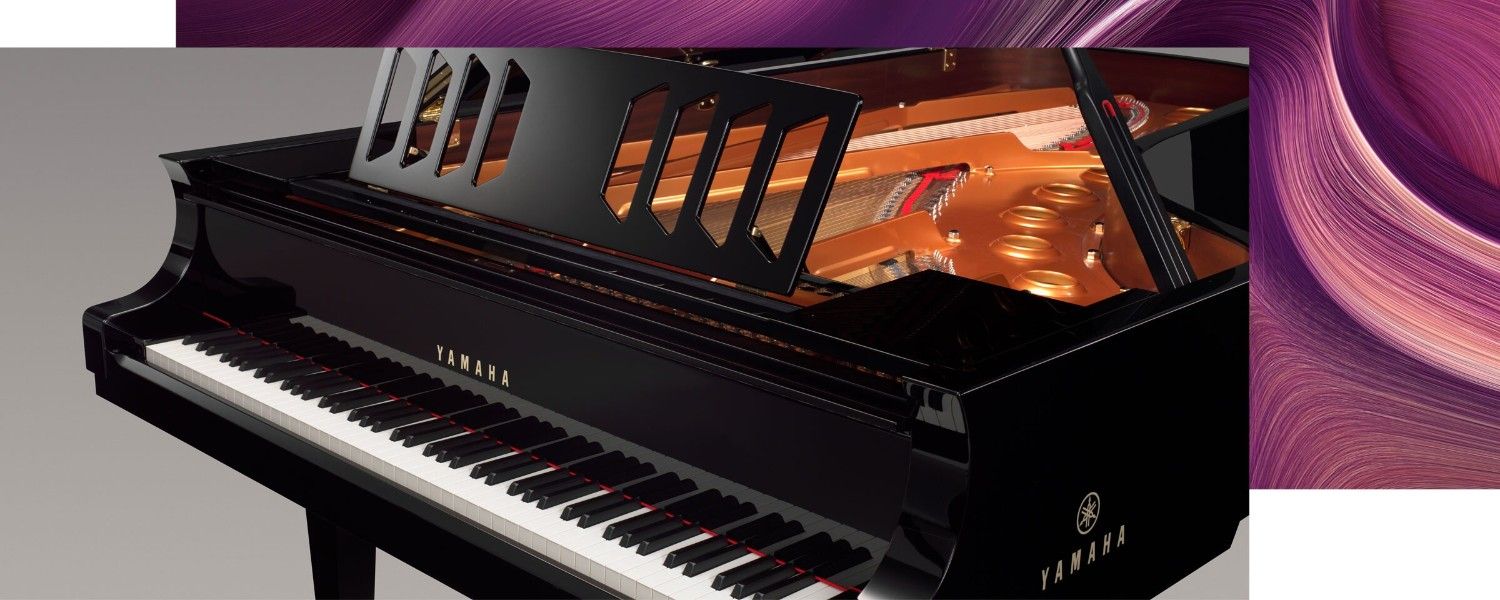
A Piano is rarely bought on impulse. It tends to be one of the more considered purchases a musical household makes, since the right instrument can shape years of practice, teaching and performance. For over a century, Yamaha has built its reputation around exactly this kind of long-term reliability, and its acoustic range remains the reference point most serious buyers in India return to when comparing options.
This guide looks closely at the full Yamaha Piano lineup currently available through Yamaha's acoustic collection, covering both grand and upright models, explaining the technical differences between them, and offering a clear comparison to help you match an instrument to your playing level and budget.
Every acoustic piano produces sound in the same fundamental way. A felt-covered hammer strikes a steel string, which vibrates against a wooden soundboard to project tone naturally, without any amplification or digital processing involved. This is a meaningful distinction from digital alternatives, since the touch, resonance and dynamic range of a genuine 88 Keys Piano respond directly to how a player physically engages with it, rather than reproducing a fixed, sampled sound.
This is also why acoustic instruments remain the standard recommendation for serious technical development. The subtlety of touch required to control tone on a real string and hammer mechanism trains a level of finger control and listening sensitivity that digital keyboards, however advanced, cannot fully replicate.
A grand piano lays its strings and soundboard horizontally, which allows for longer strings and a larger soundboard area than an upright design permits. This generally produces a fuller, more even tone across the entire keyboard, along with a more responsive repetition mechanism that benefits fast, repeated passages.
Within Yamaha's current range, the GB1K stands out as the most compact grand available, built specifically for buyers who want authentic grand piano tone and touch without requiring a large dedicated room. For buyers wanting a grand piano paired with advanced reproducing technology, the DGB1K extends this same compact grand design with additional recording and playback capability, making it a distinctive option among Grand Piano3 buyers who want more than acoustic performance alone.
An upright piano positions its strings and soundboard vertically, giving it a considerably smaller footprint while still delivering genuinely professional tone and touch. This makes the upright category the more common choice for home practice, teaching studios and households where space is a practical consideration.
Yamaha's upright range spans a wide spectrum of players. The JU109 and JX113T sit at the accessible end of the range, offering solid, dependable instruments for students beginning formal lessons. The B10 PE, B20 PE and B30 PE form a progressively refined middle tier, each step adding improvements to soundboard quality and action responsiveness. At the top of the upright range, the U1, U1J and U3 are widely regarded as the benchmark instruments for conservatories and serious home practice, offering tonal depth that closely approaches what a small grand piano can deliver. Each model in this range qualifies as a genuine Yamaha Upright Piano built to the same manufacturing standard Yamaha applies across its entire acoustic collection.
| Model | Type | Approximate Price (MRP) | Best Suited For |
|---|---|---|---|
| Yamaha JU109 | Upright | ₹2,89,990 | Students beginning formal lessons |
| Yamaha B10 PE | Upright | ₹2,99,990 | Beginners practicing at home |
| Yamaha JX113T | Upright | ₹3,59,990 | Intermediate students wanting fuller tone |
| Yamaha B20 PE | Upright | ₹3,59,990 | Students progressing through grade exams |
| Yamaha B30 PE | Upright | ₹4,69,990 | Advanced students wanting richer tone at home |
| Yamaha U1J | Upright | ₹4,69,990 | Serious students and teaching studios |
| Yamaha U1 | Upright | ₹7,99,990 | Professional practice and conservatory use |
| Yamaha U3 | Upright | ₹9,69,990 | Professionals wanting grand like depth in upright form |
| Yamaha GB1K | Compact Grand | ₹9,59,990 | Space conscious grand piano buyers |
| Yamaha DGB1K | Grand | ₹23,99,990 | Advanced buyers wanting a grand with reproducing technology |
Prices reflect current listed MRP and are always worth confirming directly, since promotions and financing options can change how each Piano Price compares against another at the time of purchase.
A common mistake among buyers is choosing based on budget alone rather than working backward from playing level. A genuine beginner is usually well served by the JU109 or B10 PE, both of which provide honest, dependable touch without unnecessary expense at a stage when consistent practice habits matter more than advanced tonal nuance. A student progressing through structured grade exams benefits from stepping up to the B20 PE, B30 PE or U1J, where a more refined action rewards developing technique. For a genuinely Professional Piano requirement, whether for conservatory level practice, teaching, or performance, the U1, U3 and the GB1K represent the level most serious musicians in India ultimately settle on.
Piano pricing in India tends to raise more questions than almost any other instrument category, largely because the price range is genuinely wide. Understanding the Yamaha Piano Price across this lineup makes it clear that the gap between an entry upright and a compact grand reflects real differences in soundboard size, action mechanism and material quality rather than brand markup alone.
This is particularly relevant when researching the overall Piano Cost in India, since import duties, delivery and installation requirements can all affect the final price a buyer pays beyond the base MRP listed for any given model. Buyers comparing a Yamaha Piano Keyboard setup against a full acoustic instrument should also weigh long term durability, since a well maintained acoustic piano typically remains playable for many decades, often outlasting several generations of digital equivalents.
For anyone ready to move forward, choosing to Buy Piano Online through the Yamaha Music Store ensures accurate specifications, transparent pricing and professional delivery and installation, all of which matter considerably more for a piano purchase than for almost any other instrument category, given its size and the care required in transport. Buyers researching Online Piano options more broadly will also find that authorised retailers offer clearer warranty terms and more reliable after sales support than unverified third party sellers.
Whether you are looking to Buy Piano for a first time student or comparing a full Acoustic Piano Online against digital alternatives, working directly through Yamaha's own retail channel remains the most dependable route to a genuine, correctly specified instrument. As a Piano Musical Instrument investment intended to last decades, this verification step is not a minor formality but a meaningful part of protecting that investment.
Beyond the obvious footprint difference, a grand piano's horizontal design allows gravity to assist the hammer's return to its resting position, which generally produces a faster, more even repetition when playing quick, repeated notes. An upright relies on springs to perform this same function, which remains highly effective in modern designs but does not quite match a grand's repetition speed at the most advanced playing level. For the vast majority of students and even many professionals, a well built upright delivers more than enough responsiveness for daily practice and performance.
The U series generally offers a noticeably larger soundboard and a more refined action compared to the B series, resulting in a fuller, more resonant tone that becomes increasingly valuable as a player's technique matures. For a genuine beginner, this difference may not yet be fully appreciated, making the B series a sensible starting point. For an advancing student or working professional, however, the U series often represents a meaningful long term investment rather than an unnecessary expense.
With regular tuning, appropriate humidity control and periodic servicing, a well built acoustic piano can remain fully playable for many decades, and it is not unusual for instruments built several decades ago to still perform beautifully today. This longevity is one of the strongest arguments in favour of an acoustic purchase over a digital alternative, since the instrument's value and performance tend to hold up remarkably well when properly maintained.
The difference is genuinely audible rather than cosmetic. Even a compact grand generally offers a larger soundboard area and a different string angle compared to an upright of similar price, both of which contribute to a rounder, more resonant tone. The tradeoff is space, since even a compact grand requires considerably more floor area than any upright model, which is why the decision between the two often comes down to available room rather than budget alone.
Beyond budget, the most important considerations are available space, current skill level and realistic long term intentions. A buyer confident that serious, sustained practice will continue for years is generally better served investing slightly more upfront in a model like the B20 PE or U1J rather than starting with the most basic option and needing to upgrade sooner than expected. Working with an authorised retailer to discuss these specifics before purchase remains the most reliable way to arrive at the right decision.
Share this post:
No products added for comparison.


 Passwords must be
at least 6 characters.
Passwords must be
at least 6 characters.