
OTP Verification
Enter the OTP that was sent to your mobile number.
Time remaining: 0:30
No Cost EMI is available on cart value of Rs: 4,995/- and above, Additional Exclusive Cashback offers from leading banks! - T&C
Sort by:
Digital wind instruments represent a precise evolution of breath-driven performance, where traditional playing technique meets controlled digital sound design. Unlike conventional acoustic instruments, these instruments respond to airflow through advanced sensing systems, allowing musicians to shape tone, dynamics, and articulation with accuracy while eliminating environmental limitations.
At the centre of this category is the ability to retain expression while gaining flexibility. A breath-controlled instrument like a Yamaha digital saxophone translates subtle variations in airflow into tonal changes, ensuring that phrasing and musical intent remain intact. This is what separates a MIDI wind controller or electronic wind instrument India category from standard digital instruments. The interaction is not just physical but expressive.
Yamaha’s digital wind instruments are built to feel natural in the hands of a player. The fingering system, airflow response, and tonal behaviour are designed to mirror acoustic instruments while extending capabilities into silent practice, multi-voice performance, and digital integration.
A digital wind instrument is an electronic instrument that uses breath input instead of a traditional reed and air column. It includes a breath sensor that detects airflow pressure and converts it into digital signals. These signals are processed by an internal sound engine to produce sound.
Unlike acoustic instruments, where sound depends on physical resonance, a digital saxophone generates sound electronically while still allowing breath and fingering to control pitch, tone, and dynamics.
This enables features such as:
This is why the question, “how does a digital saxophone work”, is often answered through its combination of breath sensing, digital sound processing, and expressive control.
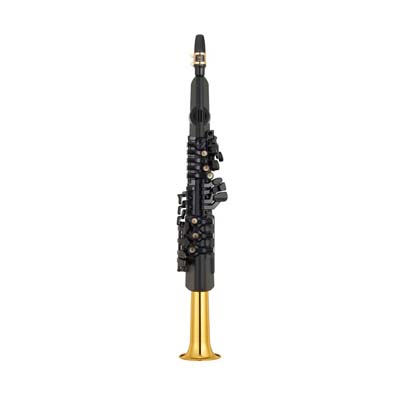
Yamaha’s YDS series defines the category of Yamaha digital wind instruments, offering instruments that combine acoustic familiarity with digital flexibility. The two primary models currently available are the Yamaha YDS-120 and Yamaha YDS-150. These instruments are not positioned as basic and advanced versions in a conventional sense. Instead, they are designed for different playing preferences and environments.
The Yamaha digital saxophone YDS-120 is built to make saxophone playing more accessible. It removes restrictions on where and when you can play, making it an ideal silent saxophone for practice in India.
It offers the following features to its users:
The YDS-120 focuses on convenience, portability, and consistency. It is particularly suitable for beginners, students, and musicians who require a portable wind instrument for regular use.
The Yamaha YDS-150 introduces a deeper level of realism through its Integrated Bell Acoustic System. This system combines digital sound generation with a real brass bell, allowing the instrument to physically resonate.
It offers:
The YDS-150 is designed for musicians who want a more immersive experience. The physical feedback makes it feel closer to an acoustic instrument while still functioning as a digital wind instrument.
| Feature | Yamaha YDS-120 | Yamaha YDS-150 |
| Instrument Type | Fully digital | Hybrid acoustic digital |
| Sound System | Digital sound engine | Integrated Bell Acoustic System |
| Bell | Standard structure | Real brass bell |
| Physical Feedback | Minimal | Full resonance and vibration |
| Built-in Speaker | No | Yes |
| Mouthpiece | Simplified design | Acoustic-style design |
| Portability | More portable | Slightly heavier |
| Use Case | Practice, beginners | Performance, advanced players |
| Power | USB and batteries | USB and batteries |
| Connectivity | App and AUX input | App and AUX input |
Purchase Digital Saxophone online in India at the Yamaha Music Store.
Yamaha digital wind instruments are built to retain the expressive depth of traditional wind performance while introducing precision, control, and adaptability. Every element is designed to respond naturally to the player, making these instruments feel intuitive while expanding their capability across practice, performance, and production.
A key feature of any breath controlled instrument, the sensor detects airflow pressure and converts it into expressive sound output. This allows control over tone, dynamics, and articulation. It ensures that even the smallest variation in breath is captured accurately, allowing players to shape phrases with the same sensitivity expected from an acoustic instrument.
Both models use a fingering layout based on acoustic saxophones. This ensures familiarity for experienced players and structured learning for beginners. This makes the transition to a digital saxophone seamless, preserving technique while introducing new capabilities.
With 73 built-in voices, including 56 saxophone presets, players can explore multiple tonal variations across genres. This makes it one of the best digital wind instruments for beginners and professionals alike. It allows musicians to move beyond a single instrument identity and perform across styles without changing instruments.
Yamaha has recorded acoustic saxophones in detail using professional musicians. This ensures realistic sound reproduction across the entire range. This level of sampling ensures that a Yamaha digital wind instrument delivers consistent tonal quality without unnatural transitions.
The presence of a headphone output makes these instruments ideal as an electronic saxophone with headphones, allowing completely silent practice. This transforms practice flexibility, especially for musicians looking for a silent saxophone for practice India without compromising on expression.
Yamaha digital wind instruments are supported by dedicated applications that extend functionality beyond the instrument itself, making them more adaptable for both practice and performance.
The YDS Controller app allows detailed control over instrument settings and sound design. Players can adjust parameters, modify tonal characteristics, and customise fingering configurations through an intuitive interface. This level of control is not accessible directly on the instrument, making the app an essential extension of the playing experience.
The Rec’n’Share app is designed for practice and performance capture. It enables players to:
Understanding how does a digital saxophone work is essential for both buyers and learners, as it explains how breath and fingering are translated into sound within a digital system.
The process begins when the player blows into the mouthpiece. Unlike a traditional saxophone, there is no reed creating vibration. Instead, the instrument uses a sensor-based system to interpret performance.
In the Yamaha YDS-150, this process goes a step further. The generated sound drives a speaker connected to a real brass bell, creating physical resonance throughout the instrument. This allows the player to feel vibrations through the mouthpiece and keys, adding a tactile layer to performance.
This entire system enables the instrument to function not only as a performance tool but also as a MIDI wind controller, making it compatible with digital audio workstations and virtual instruments. It bridges traditional playing technique with modern music production, making the digital saxophone relevant across multiple musical contexts
The benefits of digital wind instruments are best understood when separated by how they impact different types of users. These instruments are not solving a single problem; they are addressing performance, practice, and learning simultaneously.
For performing musicians and experienced players, control and consistency are critical. A digital wind instrument provides both. Silent practice is one of the biggest advantages. Using an electronic saxophone with headphones, players can rehearse complex passages, refine articulation, and maintain routine without being restricted by time or environment, relevant for musicians looking for a silent saxophone for practice India, where space and noise constraints are common.
Consistency in tuning is another key benefit. Acoustic wind instruments are affected by temperature, humidity, and reed condition. A Yamaha digital wind instrument eliminates these variables, ensuring that pitch remains stable whether you are practising at home, recording in a studio, or performing in different environments.
For those who prioritise performance depth, the Yamaha YDS-150 provides a more immersive experience. Its Integrated Bell Acoustic System introduces physical resonance, allowing players to feel vibrations through the instrument. This makes it more suitable for live performance and players transitioning from acoustic saxophones who expect tactile feedback.
For beginners and students, the learning curve of wind instruments often includes challenges related to control, maintenance, and consistency. A digital saxophone simplifies this process without removing the fundamentals of technique. One of the most important advantages is the elimination of reed dependency. Beginners often struggle with reed setup and maintenance, which directly affects sound quality. Digital wind instruments remove this variable, allowing learners to focus on breath control and fingering.
The controlled environment also improves learning efficiency. With adjustable volume and headphone output, students can practice more frequently without external constraints. This consistency directly impacts skill development.
The familiar fingering system ensures that learners are building transferable skills. Since Yamaha uses a saxophone-based key layout, transitioning to an acoustic instrument later becomes easier.
The Yamaha YDS-120 is particularly suited for beginners due to its simplified mouthpiece design and ease of use. It allows new players to produce sound without focusing heavily on embouchure in the early stages, making the instrument more approachable.
Yamaha combines decades of expertise in acoustic instrument design with advanced digital engineering. This ensures that every Yamaha digital wind instrument maintains authenticity while delivering modern functionality.
The YDS series reflects:
When choosing the best digital wind instrument for beginners or professionals, consider:
Purchase from the Yamaha Music Store, and the experience extends beyond the instrument itself. Get benefits from flexible payment options such as No Cost EMI for up to 12 months on leading bank cards. In addition, Yamaha’s dedicated customer support ensures reliable assistance at every stage, from product selection to after-sales service and provides a consistent brand experience aligned with Yamaha’s global standards.
A - A digital wind instrument is an electronic instrument that uses breath input to produce sound. It replaces the acoustic sound mechanism with a digital system while retaining expressive control.
A - A digital saxophone works by using a breath sensor to detect airflow and convert it into sound through a digital engine. Fingering controls pitch, and output is delivered through speakers or headphones.
A - The Yamaha YDS-120 vs YDS-150 comparison depends on use. The YDS-120 is ideal for portability and practice, while the YDS-150 offers a more immersive experience with acoustic resonance.
A - Yes, the Yamaha Digital Saxophone functions as an electronic saxophone with headphones, allowing completely silent practice.
A - Yes, they are considered among the best digital wind instruments for beginners due to ease of use, consistent tuning, and minimal maintenance.
A - Yes, it can function as a MIDI wind controller, allowing connection to DAWs and music production software.
A - The benefits of digital wind instruments include silent practice, portability, multiple voices, and integration with digital systems.
POPULAR SEARCHES: Digital wind instruments | Digital saxophone | Digital saxophone price India | Electronic wind instrument India
| Digital Wind Instruments | Price |
| Yamaha YDS-150 Digital Saxophone | ₹ 79,990 |
No products added for comparison.


 Passwords must be
at least 6 characters.
Passwords must be
at least 6 characters.